Essential Estonian Vocabulary For Visiting A Sauna

Author
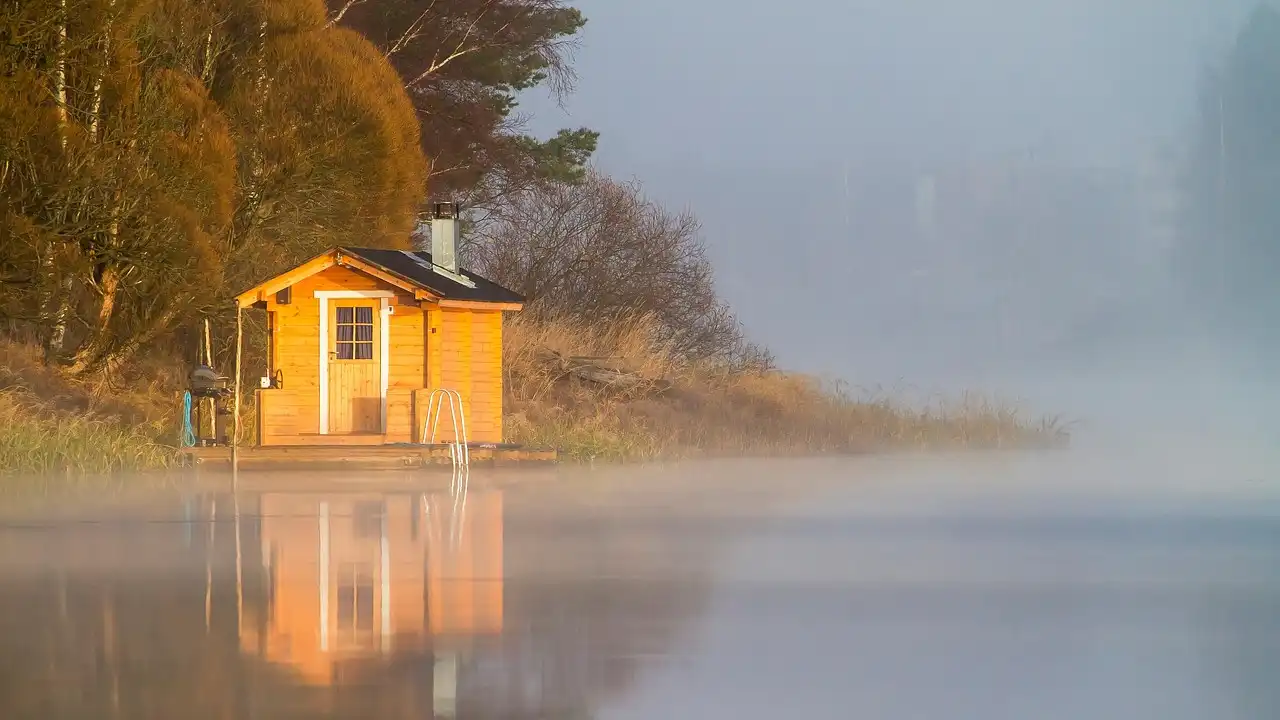
If you’re learning Estonian, there’s one cultural aspect you absolutely cannot ignore: the sauna.
For us Estonians, the sauna (saun) is not just a place to wash. It is almost holy. It is where we go to heal, to socialize, to do business, and to relax after a long week.
Traditionally, Saturday was always “sauna day,” but nowadays, any day is a good day for a saun.
If you visit Estonia or make Estonian friends, you will eventually be invited to a sauna. To make sure you don’t feel lost (or overheat without speaking up!), you need to know the right words.
Here’s your guide to essential Estonian sauna vocabulary.
Table of Contents:
The absolute basics (Leil, Lava, Keris)
Before you step into the hot room, you need to know the anatomy of an Estonian sauna.
The most important word you will ever learn is leil.
In English, you might call this “steam.” However, in Estonian, we distinguish between aur (steam, like from a boiling kettle) and leil (the hot, sharp steam generated by throwing water on hot rocks).
There is a saying in Estonia: viska leili (throw steam). This is the act that heats up the room.
Here are the nouns you need to know:
| Estonian | English | Context/Notes |
|---|---|---|
| Saun | Sauna | The building or the room itself. |
| Leil | Sauna steam | Specifically the steam created by water on rocks. |
| Lava | The bench/platform | This is where you sit. The higher you sit, the hotter it is. |
| Keris | The heater | The stove with the hot stones. |
| Eesruum | Anteroom | The room where you undress and cool down. |
| Kulp | Ladle | Used to scoop water onto the keris. |
| Kiiker | Bucket | Holds the water for the steam. |
The whisk: Viht or Vast?
If you see a bundle of leafy branches soaking in a bucket of water, don’t be alarmed. This is called a viht.
A viht is a whisk usually made of birch branches (sometimes oak or juniper). We use it to gently (or vigorously) beat the skin. This improves blood circulation and smells amazing.
Regional variation: In standard Estonian and Northern Estonia, we say viht. However, if you travel to Southern Estonia (specifically Võrumaa or Setomaa), they call it a vast.
If you want to use the whisk, the verb is vihtlema.
Kas sa tahad vihelda?
Important sauna verbs
You don’t just “sit” in an Estonian sauna. It is quite an active process!
Here are the verbs that describe what is happening.
| Estonian | English | Example usage |
|---|---|---|
| Viskama | To throw | Viska leili! (Throw steam!) |
| Higistama | To sweat | Ma higistan palju. (I am sweating a lot.) |
| Vihtlema | To whisk | Me vihtleme saunas. (We whisk in the sauna.) |
| Karastama | To toughen/cool down | Usually means jumping in cold water or snow. |
| Pesema | To wash | You always wash after the sauna. |
The concept of karastamine is very popular. This is when you run out of the hot sauna and jump into a cold pond, an ice hole, or roll around in the snow. It is great for the immune system, though it takes some bravery!
Different types of saunas in Estonia
Not all saunas are the same. When you are invited, it helps to know what kind of experience you are in for.
1. Suitsusaun (Smoke sauna)
This is the oldest type of sauna. It has no chimney. A fire is burned under the rocks for hours, filling the room with smoke. Before people enter, the fire is put out and the smoke is vented.
The Võromaa smoke sauna tradition is actually on the UNESCO Intangible Cultural Heritage list. It is a very special, long, and spiritual experience. You generally do not rush in a smoke sauna.
2. Soome saun (Finnish sauna)
This is the most common type found in gyms, spas, and modern apartments. It can be heated by wood or electricity and has a chimney.
3. Tünnisaun (Barrel sauna / Hot tub)
While a tünnisaun can refer to a sauna shaped like a barrel, nowadays people often use this word (or kümblustünn) to refer to the hot wooden tub filled with water that sits outside in the garden.
Common phrases to use in the sauna
Communication is key in a small, hot room. Here are the phrases you will need to participate in the conversation.
When you want more heat:
Viska leili!
Kas viskame veel leili?
When it is too hot:
Don’t be a hero. If it is too hot, say so.
Liiga kuum on.
Ma pean minema jahtuma.
Greeting and wishing well:
Just like saying “Bon appetit” before eating, we have a phrase for the sauna.
Head leili!
You can say this when someone is entering the steam room, or when the first scoop of water hits the rocks.
After the sauna:
When you come out of the shower or the sauna room, looking red and steamy, someone might say to you:
Head leiliõnne!
Alternatively, you can simply ask:
Kuidas leil oli?
Leil oli väga vihane.
Summary
The sauna is the heart of the Estonian home.
If you can remember the difference between leil (steam) and viht (whisk), and you know how to ask someone to throw more water on the rocks, you will be welcomed warmly (pun intended) into any Estonian company.